
Share Michael David Wright's obituary with others.
Invite friends and family to read the obituary and add memories.
Stay updated
We'll notify you when service details or new memories are added.
You're now following this obituary
We'll email you when there are updates.
Select your format and elements to print

IN LOVING MEMORY OF Michael David Wright
Michael David
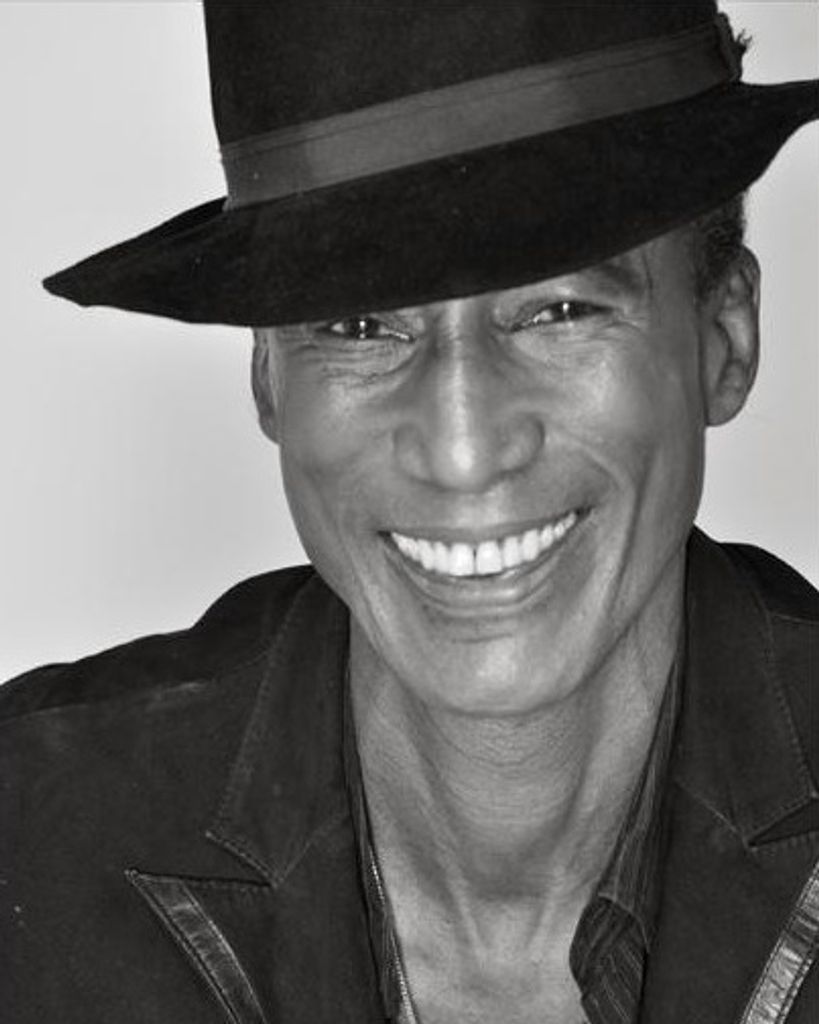
Wright
Apr 30, 1956 — Aug 19, 2026
Michael David Wright's Obituary
Celebrating the Life and Legacy of Michael David Wright
The Intensity of Truth: An Actor of Fearless Humanity
April 30, 1956 – August 19, 2026
Michael David Wright, the magnetic and fiercely committed actor whose performances brought raw truth and aching humanity to some of film and television’s most complicated characters, passed away peacefully in California on August 19, 2026. He was 70 years old.
In his final moments, his wife, daughter, stepchildren, and dear friends surrounded Michael. His passing followed complications from several health conditions, including Marchiafava-Bignami disease and heart failure.
Some actors portray characters. Michael Wright revealed them.
He possessed the rare ability to make swagger look like armor, rage look like grief, and silence feel like a confession. Where other performers played notes, Michael played whole chords of human conflict and vulnerability wrapped in streetwise confidence, kinetic anger concealing deep emotional pain, and pride wrestling with the need to be loved.
His gift was not making difficult men easy to love. It was making them impossible to dismiss.
Born on April 30, 1956, in New York City, Michael was the son of the late Alberta Wright, the pioneering restaurateur and cultural force behind Jezebel, the celebrated soul-food restaurant in Manhattan’s theater district. Jezebel was far more than a restaurant. It became a gathering place for artists, activists, musicians, actors, and cultural leaders. It was a room filled with beauty, conversation, possibility, and Alberta’s unmistakable hospitality.
Young artists, including Denzel Washington, Wesley Snipes, and Laurence Fishburne, found a second home there, while Alberta became a mother figure and a source of encouragement to many. Michael grew up in a world shaped by his mother’s independence, creativity, activism, generosity, and belief in the transformative power of art.
A graduate of New York City’s New Lincoln School, Michael continued his training at the Lee Strasberg Theatre and Film Institute and became associated with the Actors Studio. His path to formal study began through an extraordinary turn of fate: Anna Strasberg visited Alberta’s vintage clothing store, learned that her son wanted to become an actor, and invited Michael to the institute.
He entered through a work-study program, mopping floors, answering telephones, and performing whatever tasks were required in exchange for acting classes. His dedication eventually earned him a full scholarship. It was an early demonstration of the seriousness with which he would approach his life’s work: Michael was willing to labor for the opportunity to learn, and once the door opened, he gave himself completely to the craft.
Michael made an unforgettable early impression in Philip Kaufman’s The Wanderers in 1979, portraying Clinton, the sharp, stylish, and commanding leader of the Del Bombers. Even then, he possessed the screen authority of an actor who understood that stillness could be as powerful as movement.
In Robert Altman’s Streamers in 1983, Michael delivered a devastating performance as Carlyle, a volatile and alienated Black soldier trapped inside the racial, sexual, and psychological tensions of a military barracks during the Vietnam era. His performance helped announce him as an actor of exceptional emotional courage. The film’s male ensemble—including Michael, Matthew Modine, David Alan Grier, Mitchell Lichtenstein, Guy Boyd, and George Dzundza, jointly received the prestigious Volpi Cup for Best Actor at the Venice Film Festival.
To a generation of science-fiction viewers, Michael became the heart and streetwise conscience of V, V: The Final Battle, and V: The Series as Elias Taylor. He transformed Elias from a small-time hustler into an indispensable resistance fighter, grounding an epic alien-invasion story in recognizable, working-class humanity.
He would continue to create unforgettable men across film and television: the chillingly charismatic gang leader Victor Duncan in The Principal; the wounded and morally conflicted Raynathan “Ray” Skuggs opposite Wesley Snipes in Sugar Hill; the desperate, explosive, and spiritually searching Omar White in HBO’s Oz; and Lazarus Prime in Black Lightning.
Michael never approached these men as stereotypes, monsters, or convenient villains. He searched for the injury beneath the anger, the fear beneath the bravado, and the piece of humanity each character was still fighting to protect. He understood that the actor’s responsibility was not to judge a character but to reveal him.
The Role That Became Immortal
Although Michael’s body of work was rich and varied, it was his performance as Eddie King Jr., affectionately known to generations of fans as Eddie Kane Jr. in Robert Townsend’s 1991 classic The Five Heartbeats, that became his signature masterpiece.
Michael gave Eddie the effortless magnetism of a natural frontman: the voice, the walk, the confidence, the danger, and the undeniable certainty that when Eddie entered a room, the room was his.
But Michael also revealed what existed underneath the spotlight.
He showed audiences the frightened man beneath the ego, the loneliness beneath the arrogance, and the spiritual emptiness beneath the addiction. He charted Eddie’s unraveling without vanity and without asking the audience to look away. Through Michael’s performance, Eddie’s collapse was not treated as a spectacle. It was experienced as a tragedy.
And then came redemption.
When a broken and humbled Eddie reappears in a storefront church and steps before the microphone to sing, the moment becomes more than a comeback. It becomes a resurrection. Michael’s face carries the history of everything Eddie has lost and the fragile possibility that a human being can lose nearly everything without being beyond grace’s reach.
That scene remains one of the most emotionally resonant in Black cinema because Michael made the audience believe in both Eddie’s suffering and his salvation.
Robert Townsend, Michael’s director, collaborator, and longtime friend, remembered him with these words:
“Michael was a pure artist, a rare force of nature. He was truly committed to the craft of acting, a one-in-a-generation talent.”
Michael once explained his artistic standard plainly:
“The greatest sin an actor can commit is to fail to be interesting.”
Michael Wright never committed that sin.
He wanted audiences to lean forward, to search his face, and to wonder what was happening behind his eyes. His process was musical; moment by moment, beat by beat, building a character until every gesture carried emotional meaning. He did not merely perform the words. He played the life underneath them.
Beyond the screen, Michael was a man of enormous curiosity and appetite for life. He spoke five languages, traveled extensively, fished and dived around the world, spent time in Tanzania and Senegal, swam with sharks, explored distant cultures, and believed that experience was one of an artist’s greatest investments.
He was worldly, adventurous, thoughtful, stylish, funny, and endlessly interested in the possibilities of life. Those experiences did not sit outside his artistry, but they fed it. Every place he visited, every person he encountered, and every life he observed deepened the emotional reservoir from which he created.
Michael is survived by his beloved wife, Susan Wright; his daughter, Manon Wright; his granddaughter, Yoko; his stepchildren, Byron, Brittney, Brea, and Sir Barr; and his brother, Donald Wright. He is also survived by a host of nieces, nephews, and cousins.
He was preceded in death by his mother, Alberta Wright, and his brother, Ronald Wright.
He is also lovingly remembered by a chosen family of lifelong friends and artistic brothers, including Denzel Washington, Brad Johnson, Cécilia Rodhe, and his fellow surviving Five Heartbeats cast members Robert Townsend, Leon, Harry Lennix, and Tico Wells.
Michael Wright leaves behind far more than a list of credits.
He leaves behind a standard.
A standard of fearlessness. A standard of preparation. A standard of emotional honesty. A standard that says an actor must never settle for the surface when the human soul is waiting underneath.
He showed generations of performers that acting could be more than entertainment. It could be revelation. It could be liberation. It could give dignity to people whom the world had already judged and discarded.
Whenever Carlyle’s fury tears through the barracks in Streamers, whenever Elias Taylor finds the courage to stand with the resistance, whenever Omar White wrestles with his hunger for redemption, and whenever Eddie King Jr. steps before that church microphone and finds his way home, Michael’s extraordinary gift will live again.
His characters remain with us because Michael did not simply play them.
He gave them breath. He gave them wounds. He gave them dignity. He gave them souls.
Michael once offered this final piece of wisdom:
“When you love what you do, it will love you back.”
Michael Wright gave himself completely to the work he loved. Now that work will continue loving him back through every audience moved by his performances, every actor inspired by his courage, and every unforgettable character who still breathes because Michael Wright once stepped before a camera and told the truth.
Memorial services are pending.
Michael David Wright's Guestbook
This site is protected by reCAPTCHA and the
Google Privacy Policy and Terms of Service apply.
Service map data © OpenStreetMap contributors